
What Is a Hybrid Appraisal and When Is It Used?
A hybrid appraisal pairs a property data collector with a remote licensed appraiser. See when lenders use one and how it affects your loan timeline and costs.

By Julian Dawson
A hybrid appraisal can shave days off your mortgage timeline and reduce upfront costs, but it also raises a fair question: is a remote valuation trustworthy enough for something as large as a home loan? If you are buying, refinancing, or tapping home equity, the valuation method your lender chooses affects how fast your loan closes, how much you pay out of pocket, and sometimes whether the deal moves forward at all. Understanding how hybrid appraisals work, and the specific situations where lenders rely on them, helps you set realistic expectations and avoid surprises at the closing table.
What Is a Hybrid Appraisal and How Does It Work?
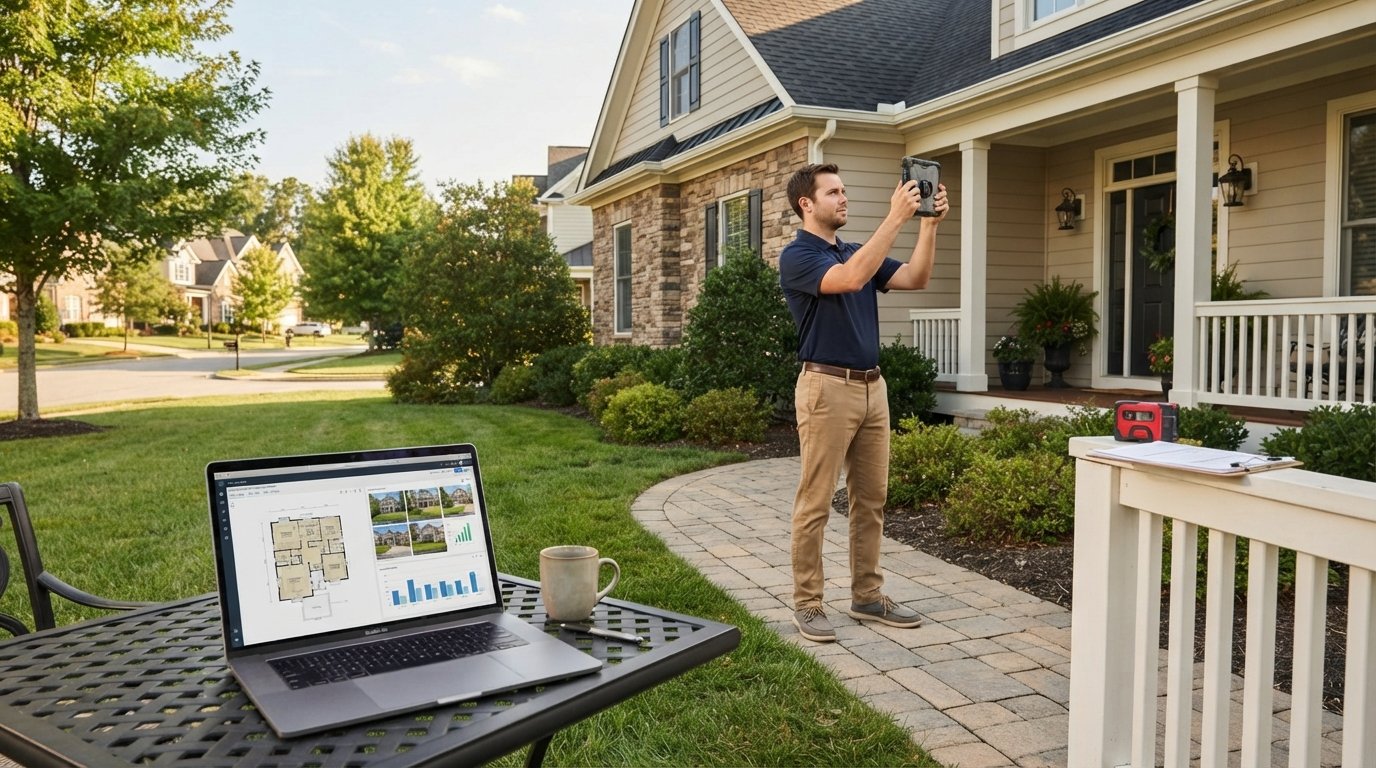
A hybrid appraisal (sometimes called a bifurcated appraisal) splits the traditional appraisal into two distinct parts. A trained property data collector visits the home to gather facts and take photos, while a state-licensed appraiser reviews that information remotely and produces the final opinion of value. The appraiser never sets foot inside the property, but still signs off on the valuation using the collected data, public records, market comps, and their professional judgment.
This is different from a full interior appraisal, where the appraiser personally inspects the inside and outside of the home, and it is different from a desktop appraisal, where no one visits the property at all. The hybrid model sits in the middle: a human being physically verifies the condition and features of the home, but the licensed appraiser completes the analysis off-site. That division of labor is the defining feature of the product.
The process typically unfolds in a predictable sequence. After you apply for a loan, the lender orders the appraisal through an appraisal management company (AMC). The AMC dispatches a data collector, often within a few business days, and that person completes a standardized inspection that focuses on measurable facts rather than value opinions. The collected data then flows to the appraiser, who reconciles it with county records and recent sales of similar homes. The final report usually arrives faster than a traditional appraisal because the appraiser is not scheduling and driving to multiple properties.
It helps to see the division of responsibilities clearly, since that is what makes the hybrid model work:
- Property data collector: Visits the home, measures rooms, documents condition, notes upgrades or defects, and uploads photos and sketches using standardized software. This person does not estimate value and typically is not a licensed appraiser.
- Licensed appraiser: Reviews the collected data, verifies public records, selects comparable sales, and prepares the final appraisal report with a supported opinion of value.
- Appraisal management company: Coordinates the order, assigns the collector and appraiser, and ensures the report meets lender and regulatory standards.
- Lender: Reviews the completed appraisal against loan guidelines and decides whether it is acceptable for the specific transaction.
Because two professionals handle different parts of the job, the hybrid appraisal can be completed with less scheduling friction. A data collector can often visit within days, and the appraiser can work on multiple reports without leaving the desk. For borrowers in competitive markets or on tight timelines, that efficiency can matter as much as the fee savings.
When Is a Hybrid Appraisal Used?
Lenders do not use hybrid appraisals for every loan. They choose the valuation method based on loan type, risk profile, property characteristics, and investor guidelines. The most common situations where a hybrid appraisal appears include certain refinances, low-risk purchase transactions, and home equity products where the lender already has significant information about the property.
Refinances are the most frequent use case. When a homeowner refinances a conventional loan and the lender already has an established relationship and prior valuation data, a hybrid appraisal can confirm the current value without the cost and delay of a full interior inspection. Streamlined refinance programs, including some government-backed options, also lean on alternative valuation methods when the borrower has a strong payment history and the loan meets specific criteria. Cash-out refinances generally receive more scrutiny because the borrower is extracting equity, so a full appraisal is more common there, but hybrids still appear when the loan-to-value ratio is conservative.
On the purchase side, hybrids tend to show up in lower-risk scenarios. A strong buyer with excellent credit, a large down payment, and a property in a well-documented neighborhood may qualify for a hybrid valuation. New construction and condominiums are less likely candidates because they often require specialized inspection or project review. The table below summarizes the situations where hybrids are most and least likely to be accepted:
- Most likely: Rate-and-term refinances, certain streamlined refinance programs, home equity loans and HELOCs with low loan-to-value ratios, and low-risk purchases with strong borrower profiles.
- Sometimes: Cash-out refinances with conservative equity positions, investment properties with clean rental histories, and loans where recent appraisal data exists.
- Least likely: High loan-to-value purchases, distressed or unique properties, new construction, multi-unit buildings, and transactions flagged for potential fraud or valuation risk.
The decision ultimately rests with the lender and the investor who will purchase the loan. Fannie Mae and Freddie Mac permit hybrid appraisals under specific eligibility rules, and lenders must confirm the property and borrower meet those requirements before ordering one. If you are curious about the loan programs that commonly use these valuations, exploring MortgageDirectory can give you plain-language context on how purchase loans, refinances, and home equity products are structured before you speak with a lender.
How Accurate Are Hybrid Appraisals?
Accuracy is the question borrowers ask most often, and the honest answer is that hybrid appraisals are generally reliable when the data collection is thorough and the appraiser is experienced. Studies and lender experience have shown that hybrid valuations produce values close to traditional appraisals in most standard residential transactions. The model works best for typical single-family homes in neighborhoods with plenty of recent comparable sales, where the appraiser can lean on strong market data.
That said, the approach has real limitations. A data collector documents what is visible and measurable, but may miss subtle quality issues that an appraiser would flag during a walk-through, such as uneven flooring, signs of water intrusion, or a poorly executed renovation. The appraiser also cannot ask follow-up questions on site or observe how the home shows in person. For homes with unusual features, deferred maintenance, or rapidly changing markets, those gaps can affect the final value.
Regulators and government-sponsored enterprises have responded by tightening requirements around data collector training and report quality. Collectors typically complete standardized coursework and use software that enforces photo and measurement standards, and appraisers remain accountable for the final opinion of value. Lenders also review reports for red flags and can upgrade to a full appraisal when something looks off. In practice, the accuracy of a hybrid appraisal depends heavily on the quality controls the lender and AMC put in place.
When a Full Interior Appraisal Is Still Required
Despite the growth of hybrid valuations, many transactions still require a traditional interior appraisal. Lenders order a full appraisal whenever the risk profile calls for it, and certain loan types have hard requirements that cannot be waived. Knowing these triggers helps you anticipate what your lender will ask for.
Government-backed loans are a common source of full appraisal requirements. FHA loans generally require an FHA-approved appraiser to inspect the interior and exterior of the home, and VA loans require a VA-assigned appraiser to complete a full inspection that confirms the property meets minimum property requirements. USDA loans also typically involve an interior inspection. On the conventional side, high loan-to-value purchases, cash-out refinances with significant equity extraction, and properties with complex characteristics usually move to a full appraisal.
Unique or risky properties are another trigger. Homes with unusual construction, mixed-use zoning, acreage, or significant deferred maintenance often need an appraiser on site to assess condition and marketability. Similarly, if the data collector reports something inconsistent with public records or the appraiser cannot reconcile the information, the lender may upgrade the order to a full appraisal. In fast-moving markets where values are volatile, some lenders prefer the deeper verification of an interior inspection.
Borrowers should also know that the choice is not always visible upfront. A lender may initially order a hybrid appraisal and later convert it to a full appraisal if the collected data raises questions. That conversion can add time and cost, which is one reason it pays to ask your loan officer which valuation method is expected for your file and what could cause an upgrade.
How Valuation Method Affects Your Timeline and Costs
The valuation method you receive has a direct effect on two things borrowers care about most: how long the loan takes and how much they pay for the appraisal. Hybrid appraisals are generally faster because the data collection and the appraisal analysis can happen in parallel, and the appraiser is not constrained by drive time and in-person scheduling. In many markets, a hybrid report can be completed in a fraction of the time of a traditional appraisal, which can shorten the overall closing timeline.
Costs also tend to be lower. Traditional appraisals involve a licensed appraiser traveling to the property, inspecting it, and preparing the report, and the fee reflects that labor. Hybrid appraisals split the work, and the combined cost of a data collection visit plus a remote appraisal is often less than a full interior appraisal. The exact savings vary by market and lender, so borrowers should ask for a clear breakdown of appraisal-related fees rather than assuming a specific number.
To keep your timeline and budget on track, follow a simple preparation routine once your appraisal is ordered:
- Ask which valuation method your lender ordered. Confirm whether it is a hybrid, desktop, or full appraisal and what could trigger an upgrade.
- Prepare for the data collection visit. Clear access to all rooms, the attic, and the mechanical systems, and have documentation for recent renovations ready.
- Provide a list of improvements. Give the collector and appraiser records of permitted upgrades, since documented improvements can support the final value.
- Review the completed report. Check for factual errors in square footage, bedroom count, or condition notes and ask your lender about the process for correcting mistakes.
Good preparation matters more with a hybrid appraisal than many borrowers realize. Because the appraiser relies on the collector's documentation, missing access or incomplete records can result in a lower value or a request for a re-inspection. A short written summary of recent updates, along with receipts or permits, gives the appraiser stronger evidence to work with.
Key Takeaways for Borrowers
Hybrid appraisals are a legitimate, widely used valuation tool that can speed up certain loans and reduce costs, but they are not a universal replacement for the traditional walk-through. The method your lender chooses depends on the loan program, your risk profile, and the property itself. Borrowers who understand the difference can ask better questions, prepare more effectively, and avoid surprises when the report comes back.
If you are comparing loan options and want to understand how valuation requirements fit into the broader picture, using an interactive mortgage calculator and reading plain-language guides can help you estimate payments and plan for closing costs before you request quotes. Being informed about what is a hybrid appraisal and when it is used puts you in a stronger position to evaluate lender offers and move through the process with confidence.