
How Much Down Payment Do You Need for a Mortgage?

For most aspiring homeowners, the down payment is the single largest financial hurdle standing between them and homeownership. The question of how much down payment is needed for a mortgage is not just about a percentage, it is a complex calculation that influences your loan type, monthly costs, and long-term financial health. While the classic 20% figure is often cited as the gold standard, the reality is far more nuanced, with options ranging from 0% to 3.5% to 20% and beyond. Understanding the trade-offs of each threshold is the key to making a confident, informed decision that aligns with your budget and homebuying goals.
The Standard Benchmarks and Their Impact
The amount you put down directly affects several critical components of your mortgage. A higher down payment reduces your loan amount, which in turn lowers your monthly principal and interest payment. More significantly, it can help you avoid Private Mortgage Insurance (PMI), an additional monthly fee that protects the lender if you default. For conventional loans, putting down less than 20% typically triggers PMI, which can add hundreds of dollars to your monthly payment until you reach 20% equity in the home.
Conversely, a lower down payment preserves your cash reserves for moving costs, repairs, and emergencies, making homeownership accessible sooner. This strategy, however, comes with the costs mentioned above: a higher loan balance, higher monthly payments, and likely PMI. The decision hinges on your personal financial picture, including your savings, income stability, and comfort with debt. For a deeper look at managing this balance, our resource on how to make a down payment without ruining your finances offers practical strategies.
Breaking Down Minimum Down Payment Requirements by Loan Type
Your choice of mortgage program dictates your minimum down payment. Here is a detailed overview of the most common options.
Conventional Loans
Backed by Fannie Mae and Freddie Mac, conventional loans are the most common. While they are available with as little as 3% down for qualified first-time homebuyers, putting down less than 20% will require PMI. Borrowers with strong credit scores often qualify for the best rates with these programs, even with lower down payments.
FHA Loans
Insured by the Federal Housing Administration, FHA loans are popular for buyers with lower credit scores or limited savings. The minimum down payment is 3.5% if your credit score is 580 or higher. FHA loans require both an upfront mortgage insurance premium and an annual premium for the life of the loan in most cases, which is a key cost difference from conventional PMI.
VA Loans
Available to eligible veterans, active-duty service members, and certain surviving spouses, VA loans are a monumental benefit, offering 0% down payment with no mortgage insurance requirement. While not mandatory, a down payment on a VA loan can provide advantages, such as reducing the VA funding fee and lowering your monthly payment. To explore these benefits in detail, consider reading about the five benefits of a down payment for a VA loan.
USDA Loans
USDA loans, guaranteed by the U.S. Department of Agriculture, also offer 100% financing (0% down) for eligible borrowers in designated rural and suburban areas. Income limits and property location restrictions apply.
Key Factors That Influence Your Ideal Down Payment
Deciding on your down payment amount is not just about meeting the minimum. Consider these pivotal factors.
Your debt-to-income ratio (DTI) is a major one. Lenders calculate this by dividing your total monthly debt payments by your gross monthly income. A larger down payment reduces your loan amount and monthly mortgage payment, which can help you stay within a lender’s DTI limits, often a maximum of 43% for many loans. Your credit score also plays a crucial role. While it does not change the minimum down payment for programs like FHA, a higher score can secure you a better interest rate on a conventional loan, potentially offsetting some cost of a lower down payment.
Perhaps the most critical factor is your post-closing liquidity. Homeownership brings immediate and unexpected expenses, from a broken appliance to a leaky roof. Financial advisors commonly recommend having three to six months of living expenses saved in addition to your down payment and closing costs. Exhausting all your savings to reach a higher down payment threshold can leave you financially vulnerable.
Calculating the Full Cash-to-Close Picture
The down payment is only one part of the cash you need to bring to the closing table. Closing costs, which include loan origination fees, appraisal fees, title insurance, and prepaid items like property taxes and homeowners insurance, typically range from 2% to 5% of the home’s purchase price. For a $400,000 home, that is an additional $8,000 to $20,000.
Therefore, when budgeting, you must calculate your total “cash to close.” This is the sum of your down payment plus closing costs, minus any earnest money deposit you have already paid. Failing to account for closing costs is a common mistake for first-time buyers. It is also worth exploring if you can negotiate for the seller to contribute to your closing costs, which can significantly reduce your upfront burden.
Strategies for Saving and Sourcing Your Down Payment
Accumulating a down payment requires a disciplined and strategic approach. Start by creating a dedicated savings account and setting up automatic transfers. Review your budget for non-essential expenses you can temporarily reduce or eliminate. Consider leveraging windfalls like tax refunds, bonuses, or gifts. Many loan programs allow gift funds from family members for part or all of the down payment, provided they are properly documented with a gift letter.
Beyond personal savings, a wide array of down payment assistance (DPA) programs exist, including grants, forgivable loans, and matched savings programs offered by state housing finance agencies, municipalities, and non-profits. These programs often have specific eligibility requirements based on income, profession (e.g., teachers, first responders), or location. Researching these options can make a substantial difference. For a comprehensive overview of available programs, our guide on how to get down payment help buying a home is an essential read.
Frequently Asked Questions
Is it ever a good idea to put down less than 20%? Yes, absolutely. For many buyers, especially first-timers, putting down less than 20% is a strategic choice to enter the housing market sooner, keep more cash for emergencies and investments, and start building equity. The cost of PMI may be outweighed by the benefits of homeownership and potential home appreciation.
Can I buy a house with no down payment? Yes, through VA and USDA loan programs if you meet their specific eligibility criteria. Some conventional loan programs also offer very low down payment options, but 0% down conventional loans are extremely rare and not widely available.
Does a larger down payment get me a lower interest rate? Sometimes. While your credit score is the primary driver of your rate, a larger down payment can sometimes qualify you for a slightly better rate because it represents less risk to the lender. The difference, however, may be modest.
How does the down payment affect my offer on a house? In a competitive market, a higher down payment can make your offer stronger. Sellers view it as a sign that you are financially secure and that the deal is less likely to fall through due to financing issues. It demonstrates “skin in the game.”
Can I use retirement funds for my down payment? You can, but it is generally not advised. Withdrawals from traditional IRAs or 401(k)s may incur taxes and penalties, and you will be sacrificing your long-term retirement growth. Some plans allow for loans, but these come with their own risks and repayment requirements.
Ultimately, determining how much down payment you need for a mortgage is a personal equation balancing accessibility, affordability, and financial security. There is no one-size-fits-all answer. By thoroughly evaluating loan programs, calculating all upfront costs, and honestly assessing your financial reserves, you can choose a down payment amount that serves as a solid foundation for your new home, not a financial strain. The goal is sustainable homeownership that contributes to your overall financial well-being for years to come.

About Daniel Smith
Recent Posts
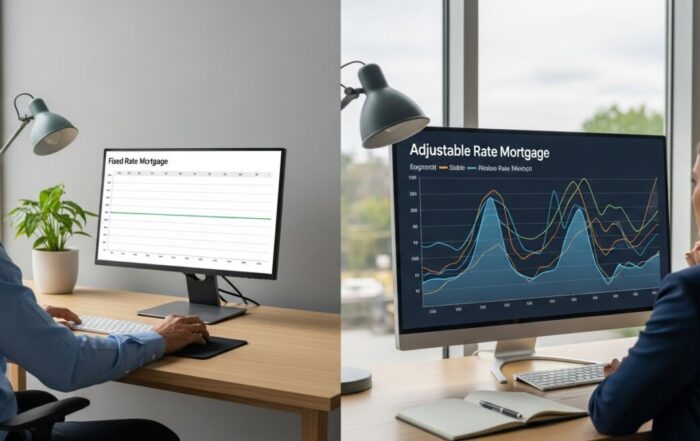
Fixed vs Adjustable Mortgage: A Complete Guide to Choosing
Understand the fixed vs adjustable mortgage meaning to choose the right loan. This guide helps you secure stable payments or maximize initial savings based on your financial plan.

How Much Down Payment Do You Need for a Mortgage?
Learn how much down payment is needed for a mortgage, from 0% to 20%, and discover the loan types and strategies that make homeownership achievable.

How to Improve Mortgage Eligibility and Secure Loan Approval
Learn actionable strategies to boost your credit, manage debt, and save effectively to improve mortgage eligibility and secure better loan terms.

Finding the Best Mortgage Lenders for First Time Buyers
Discover how to identify lenders with first time buyer programs, low down payments, and exceptional support to simplify your path to homeownership.